


Our Storage Platforms
Enterprise Storage Platforms for Modern Infrastructure
Built for Speed. Designed to Scale. Ready for the Future.
Empower your infrastructure with UNITEKME storage solutions engineered for performance, scalability . . .
Ultra-Low Latency Storage for Mission-Critical Workloads
NVMe All-Flash Storage Servers
NVMe All-Flash Storage for High-Performance Data Environments
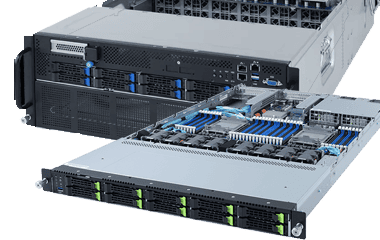
NVMe all-flash storage servers are designed to deliver the highest level of storage performance by utilizing NVMe SSD technology, which provides significantly lower latency and higher throughput compared to traditional storage solutions.
These platforms are ideal for environments where fast data access is critical, such as real-time analytics, transactional systems, and high-performance applications.
By eliminating mechanical components and leveraging parallel data paths, NVMe storage ensures consistent and predictable performance.
Architecture Role
NVMe all-flash storage serves as the performance tier within enterprise storage architecture. It is typically deployed alongside high-performance compute platforms and connected via high-speed networking to ensure minimal latency between data and processing layers.
In modern architectures, it supports applications that require consistent, high-speed data access and acts as the primary storage layer for performance-sensitive workloads.
Key Features
- NVMe SSD-based architecture
- Ultra-low latency data access
- High IOPS and throughput
- Scalable performance
- Optimized for data-intensive workloads
Applications Include :

WHY UNITEK ?
- High-performance NVMe-ready platforms
- Optimized configurations for enterprise workloads
- Designed for modern data environments
Optimized Storage for Mixed Workloads
Hybrid Storage Servers
Hybrid Storage for Balanced Performance and Capacity
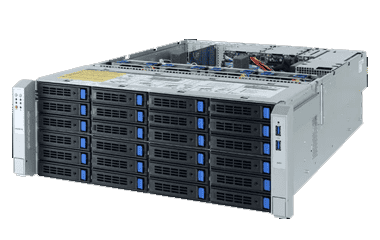
Hybrid storage servers combine high-speed SSDs with high-capacity HDDs to deliver a balanced approach to storage performance and cost efficiency. By utilizing SSDs for caching and frequently accessed data, and HDDs for bulk storage, these systems provide an optimal mix of speed and scalability.
They are particularly suited for organizations managing diverse workloads that require both performance and large storage capacity.
Architecture Role
Hybrid storage acts as a tiered storage layer, balancing performance and capacity within enterprise environments. It is typically integrated into data center infrastructure to support a wide range of applications without the cost of full all-flash systems.
It enables organizations to optimize storage costs while maintaining acceptable performance levels for most workloads.
Key Features
- SSD + HDD architecture
- Intelligent caching mechanisms
- Cost-effective scalability
- Flexible storage tiers
- Balanced performance
Applications Include :
WHY UNITEK ?
- Flexible storage configurations
- Optimized for enterprise environments
- Cost-effective solutions
Flexible Storage Built on Standard Hardware
Software-Defined Storage Nodes
Software-Defined Storage for Scalable Data Infrastructure
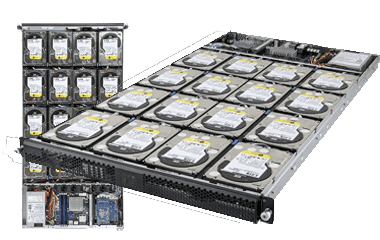
Software-defined storage (SDS) enables organizations to build scalable and flexible storage infrastructure by separating storage software from hardware. Instead of relying on proprietary storage systems, SDS uses standard server platforms to create distributed storage environments.
This approach allows organizations to scale storage horizontally, increase flexibility, and reduce dependency on specialized hardware. complex computations that would not be feasible on a single system.
Architecture Role
SDS forms the core of distributed storage architectures, enabling data to be stored and managed across multiple nodes. It provides scalability, redundancy, and fault tolerance by distributing data across systems.
It is often used as the backbone of modern cloud and data lake architectures.
Key Features
- Hardware-agnostic architecture
- Scalable distributed storage
- High flexibility
- Cost-efficient expansion
- Software-driven management
Applications Include :
WHY UNITEK ?
- Enterprise-ready storage platforms
- Support for scalable architectures
- Flexible deployment options
Scalable Storage for Unstructured Data
Object Storage Servers
Object Storage for Large-Scale Data Management
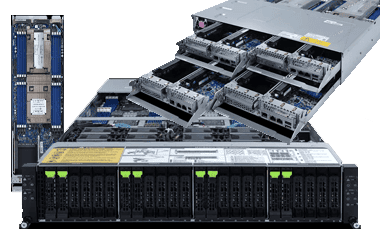
Object storage platforms are designed to manage massive volumes of unstructured data such as files, images, videos, and AI datasets. Unlike traditional file or block storage, object storage uses a flat structure with metadata, enabling efficient scalability and data management.
These systems are ideal for environments where large datasets must be stored, accessed, and analyzed efficiently.
Architecture Role
Object storage serves as the data lake layer in modern infrastructure, providing scalable storage for unstructured data. It supports large datasets used in analytics, AI, and cloud applications.
It is typically integrated with compute platforms and analytics tools to enable data-driven workloads.
Key Features
- Massive scalability
- Metadata-driven storage
- Distributed architecture
- High durability
- Cost-efficient storage
Applications Include :
WHY UNITEK ?
- Scalable storage solutions
- Optimized for large data environments
- Ready for modern workloads
Modular AI Infrastructure at Scale
AI Factory | Pod Systems
AI Factory and Pod-Based Infrastructure
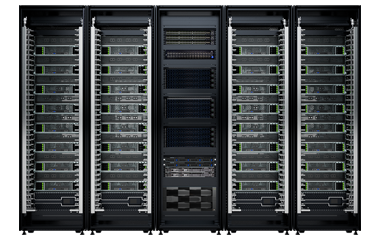
AI factory or pod-based systems are modular infrastructure architectures that integrate compute, storage, and networking into scalable building blocks.
These systems are designed for organizations that require large-scale AI capabilities, allowing them to deploy standardized infrastructure units that can be replicated and expanded as demand grows.
They represent the evolution from isolated AI environments to fully integrated, production-scale AI infrastructure.
Architecture Role
AI factory systems represent the complete infrastructure layer, integrating all components required for AI workloads into a unified architecture.
Within this architecture:
- Compute provides processing power
- Storage delivers high-throughput data access
- Networking enables seamless communication between components
These systems are designed for scalability, allowing organizations to expand infrastructure by adding additional pods while maintaining consistent performance and architecture.
Key Features
- Modular infrastructure design
- Scalable deployment
- Integrated compute, storage, and networking
- High-performance architecture
Applications Include :
WHY UNITEK ?
- End-to-end infrastructure platforms
- Scalable AI solutions
- Alignment with modern AI architecture trends


