


Our Compute Platform
Powering the Future of AI Infrastructure
Reliable AI and High-Performance Computing Products
We provide enterprise-grade AI and high-performance computing products, including AI servers, GPU clusters, edge systems, supercomputers, workstations.


Reliable, Scalable Compute for Enterprise Environments
Rack Servers
Enterprise Rack Servers for Data Center Infrastructure
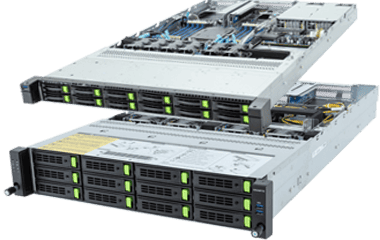
Rack servers are standardized compute systems designed for installation in data center racks, providing a structured and scalable approach to deploying IT infrastructure. They offer a balance between performance, expandability, and operational efficiency, making them the most widely used server type in enterprise environments.
These systems support a wide range of workloads, from virtualization and enterprise applications to database systems and cloud platforms, making them a versatile choice for organizations building or expanding their infrastructure.
Architecture Role
Rack servers form the primary compute layer within enterprise data center architecture. They are typically deployed in clusters and integrated with storage platforms and networking fabric to create complete IT environments. In most architectures, rack servers act as the central processing units that execute workloads, while storage and networking components provide data access and connectivity. Their modular and scalable nature allows organizations to expand compute capacity incrementally.
Key Features
- High-performance multi-core processors (Intel / AMD)
- Large memory capacity for enterprise workloads
- Flexible storage configurations (NVMe, SSD, HDD)
- Redundant power supplies and cooling
- Expandable I/O and networking options
- Standardized rack integration
Applications Include :

WHY UNITEK ?
• Enterprise-grade server platforms
• Flexible configurations for different workloads
• Strong vendor ecosystem
• Fast regional availability
Maximum Compute Power in Minimal Space
High-Density Servers
High-Density Servers for Space-Optimized Data Centers
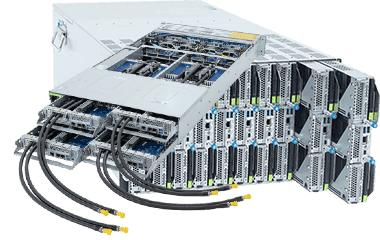
High-density servers are designed to maximize compute performance within limited physical space, making them ideal for environments where rack space, power efficiency, and cooling optimization are critical.
These systems integrate multiple compute nodes or highly compact designs into a single chassis, enabling organizations to deploy more processing power per rack unit compared to traditional server configurations.
Architecture Role
High-density servers are designed to maximize compute performance within limited physical space, making them ideal for environments where rack space, power efficiency, and cooling optimization are critical.
These systems integrate multiple compute nodes or highly compact designs into a single chassis, enabling organizations to deploy more processing power per rack unit compared to traditional server configurations.
Key Features
- High compute density per rack unit
- Multi-node configurations
- Optimized power consumption
- Efficient thermal design
- Scalable architecture
Applications Include :
WHY UNITEK ?
- Access to advanced high-density platforms
- Optimized configurations for space efficiency
- Designed for large-scale deployments
High-Performance Compute with GPU Acceleration
GPU Servers
GPU Servers for Accelerated Computing
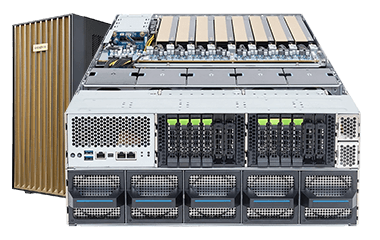
GPU servers are specialized compute systems designed to support hardware acceleration through GPUs, enabling high-performance parallel processing for compute-intensive workloads.
These platforms provide the hardware foundation required for applications that demand high processing throughput, such as data analytics, scientific computing, and advanced simulations.
Architecture Role
GPU servers act as the accelerated compute layer within infrastructure environments. They are typically deployed alongside standard compute servers and integrated into larger systems that require high-performance processing.
They provide the capability to offload specific compute tasks to GPUs, improving performance for workloads that benefit from parallel processing.
Key Features
- Multi-GPU support
- High-bandwidth memory architecture
- Optimized cooling for GPU workloads
- High-speed interconnect support
- Scalable configurations
Applications Include :
WHY UNITEK ?
- Access to enterprise GPU-enabled platforms
- Flexible hardware configurations
- Support for high-performance workloads
Compute Power Where Data Is Generated
Edge Servers
Edge Servers for Distributed and Real-Time Processing
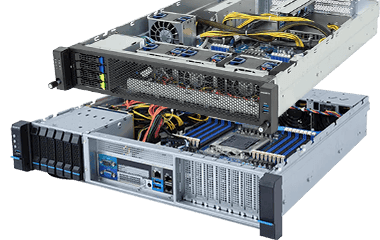
Edge servers are designed to operate outside traditional data centers, bringing compute capabilities closer to data sources. These systems enable real-time processing, reduced latency, and improved responsiveness for distributed environments.
They are often deployed in remote locations, industrial environments, or edge sites where centralized infrastructure is not practical.
Architecture Role
Edge servers extend the compute layer beyond centralized data centers, enabling distributed processing closer to end devices.
They reduce dependency on centralized infrastructure by handling data processing locally, improving latency and reducing network load.
Key Features
- Compact and rugged design
- Low power consumption
- Remote management capabilities
- High reliability
- Support for edge workloads
Applications Include :
WHY UNITEK ?
- Industrial-grade edge solutions
- Designed for harsh environments
- Flexible deployment options
Flexible and Efficient Multi-Node Compute Systems
Multi-Node / Modular Servers
Modular Server Platforms for Scalable Infrastructure
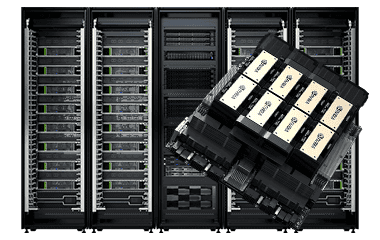
Multi-node and modular servers are designed to deliver scalable compute capacity by integrating multiple independent server nodes within a single chassis. These systems provide efficient resource utilization, simplified management, and flexible scalability.
They are particularly suited for environments that require rapid expansion and efficient use of physical infrastructure.
Architecture Role
Multi-node servers act as the foundation for cluster-based architectures, enabling scalable compute environments with efficient resource sharing.
They are commonly used in distributed systems where multiple compute nodes operate together as a single logical system.
Key Features
- Multiple nodes within a shared chassis
- Shared power and cooling resources
- High scalability
- Efficient space utilization
- Simplified infrastructure management
Applications Include :
WHY UNITEK ?
- Scalable modular solutions
- Efficient infrastructure design
- Optimized performance per rack


